
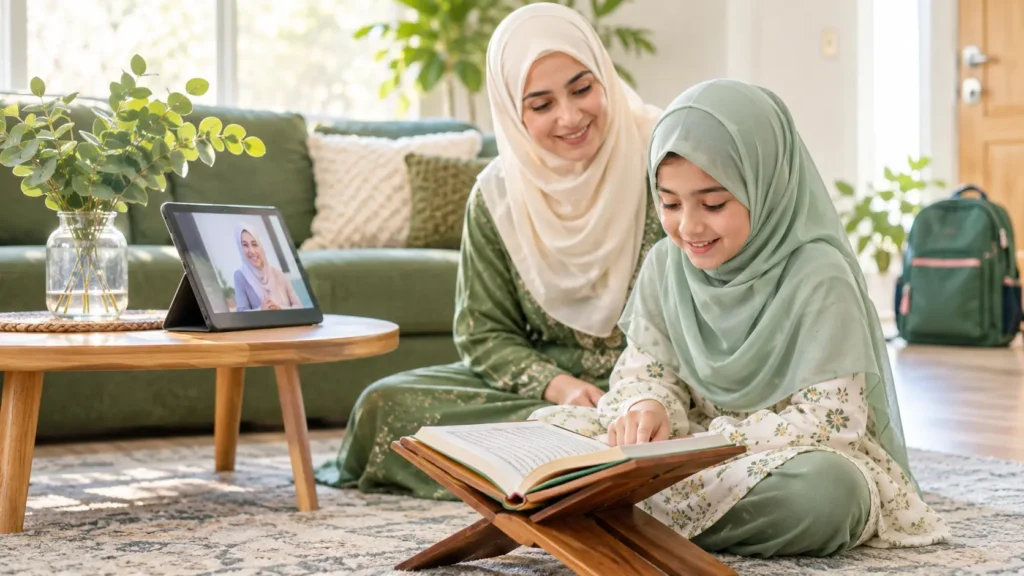
The best age to start Hifz for children in Australia is usually between five and eight, but readiness matters more than the number. A child who can read simple Arabic words, sit for about 15 minutes and enjoys the Quran is ready, whether they are five or eleven.
Many Australian parents worry that they have started too early or too late. Some feel pressure because a friend’s child began at four. Others come to Hifz later, once school, sport and weekend commitments settle down. This guide explains how to judge readiness, what each age group can realistically do, and how to fit Hifz around the Australian school year.
What Is the Best Age to Start Hifz?
There is no single best age to start Hifz, and scholars and teachers agree that it depends on the child.
A Hanafi fatwa from Darul Iftaa says there is no fixed age before or after which parents may or may not teach children the Quran. It advises parents to look at each child’s ability. If a child has a strong memory and enjoys learning, an early start is wise. If study causes the child distress, it is better to wait a little.
In practice, many teachers like to begin between about five and eight, because young children often learn by repeating and listening. But children who start later, at ten, twelve or even as teenagers, can still complete Hifz with steady effort and a good teacher.
Hifz Age by Age: What Can You Expect?
Every child is different, but these age bands give a sensible guide for Australian families.
- Ages 3 to 5 (Kindergarten and Prep): Play based listening only. Let your child hear recitation, learn short duas and become familiar with Arabic letters. Formal memorisation is not necessary yet.
- Ages 5 to 7 (Prep to Year 2): Short structured lessons of about 10 to 15 minutes, with plenty of repetition. Start with Al Fatihah and the short surahs of Juz Amma.
- Ages 8 to 10 (Years 3 to 5): A good stage for a steady routine. Children read more fluently, understand instructions and can balance Hifz with homework.
- Ages 11 to 13 (Years 6 to 8): Children set goals and see their own progress. Revision becomes the key skill.
- Ages 14 and over (Year 9 onwards): Teenagers can learn with good focus and motivation. The challenge is time, especially during exams, so a flexible plan matters.
These are guides, not rules. If your child is at the edge of a band, let their interest and focus guide you.
How Do You Know If Your Child Is Ready for Hifz?
Your child is ready for Hifz when they show interest, can focus for a short time and can read simple Arabic words.
Look for these signs:
- They enjoy listening to Quran recitation and ask to hear it again
- They can sit and repeat for about 15 minutes without becoming distressed
- They pick up short surahs from Juz Amma quickly
- They recognise Arabic letters and read simple words, even slowly
- They respond well to encouragement and small achievements
- They ask questions about the Quran, prayer or the prophets
You do not need every sign. If most are missing, there is no harm in waiting. You can build the foundations first with daily listening, short duas, Arabic letters and simple Quran stories.
Should a Child Learn to Read Arabic Before Memorising?
Yes, a child should learn to read Arabic before starting Hifz, because memorising without correct reading often locks in mistakes.
Reading skills, including correct letter sounds and basic Tajweed, give a child a solid base. Many children begin with our Noorani Qaida course , then move on to Quran Recitation before formal memorisation.
For a sense of what leading programs expect, the Hifz program at Al Siraat College in Epping, Victoria, begins its main program in Year 3. It asks students to read the Quran proficiently and to have mastered Juz 30 first. That reflects what many teachers advise: reading first, memorising second.
Is It Too Late to Start Hifz at a Later Age?
No, it is never too late to start Hifz, though the approach changes with age.
Older children and teenagers often understand instructions better, have more discipline and can plan their own revision. Adults can also memorise, with a plan that fits work and family. The most important factors are a consistent routine, regular revision and a patient teacher.
Does Starting Early Guarantee Success?
No, starting early helps, but it does not guarantee success, because consistency and revision matter more than age.
A five year old who studies sporadically may make slower progress than a ten year old with a calm daily routine. Hifz is built on three habits: a small new lesson, regular revision of recent work and a cycle that revisits older portions. A child who protects those habits will progress at their own pace. There are no guaranteed timelines, and comparing children can do more harm than good.
How Can You Fit Hifz Around Australian School Life?
You can fit Hifz around school by using short daily sessions at the same time each day and planning around the four school terms.
- Pick a regular slot: After school, before dinner or after Fajr work well for many families
- Keep sessions short: Begin with 10 to 20 minutes and build up slowly
- Plan around busy weeks: Ease the load during exams, school camps and sports carnivals, but keep revising
- Use the holidays: School holidays are a good time to add extra lessons
- Think about Ramadan: Many children enjoy preparing surahs for taraweeh
Different states observe daylight saving differently. NSW, Victoria, South Australia, Tasmania and the ACT change their clocks, while Queensland, the Northern Territory and Western Australia do not. Online lessons are booked in your local time, so you do not have to work it out yourself.
How Does Online Hifz Compare With a Hifz School or Weekend Madrasah?
Online Hifz gives private, flexible lessons, while a Hifz school offers full time immersion, and the right choice depends on your family.
Some Islamic schools run full Hifz programs, but places can be limited and competitive, and not every family lives near one. Weekend madrasah classes are valuable but often involve travel and larger groups. Online one to one lessons let a child get personal correction and a plan built around their pace, from home. Many families combine online lessons with the community of a local masjid.
What Mistakes Should Parents Avoid When Starting Hifz?
The most common mistakes are pressure, comparison, skipping revision and ignoring Tajweed.
- Pushing too hard: Memorisation should never feel like punishment
- Comparing children: Every child has a different pace, even in the same family
- Skipping revision: New lessons only last when old ones are protected
- Neglecting Tajweed: Mistakes learned early are harder to fix later
- Changing teachers often: A steady relationship with one teacher helps a child feel secure
Praise effort, celebrate small steps and keep sessions short and positive.
How Can Mairaj Ul Quran Help Your Child Start Hifz?
Mairaj Ul Quran offers online Quran classes in Australia, including our Quran Memorization (Hifz) course , with certified male and female tutors in live, private lessons.
Your child’s tutor listens to their recitation, builds a gentle daily plan and protects revision in every lesson. Children who are not ready can begin with Noorani Qaida, Daily Duas for Kids or Islamic Studies for Kids . Every new student receives a free 3 day trial, and you can see our published fees on the fee structure page. You can also explore our online Quran classes Australia families trust on the home page .
Best Age to Start Hifz for Children in Australia: Frequently Asked Questions
What is the best age to start Hifz?
The best age to start Hifz is usually between five and eight, but there is no fixed age. A child who can read simple Arabic, focus for about 15 minutes and enjoys the Quran is ready, whatever their age.
Can a 4 year old start memorising the Quran?
A four year old can listen to recitation, learn short duas and become familiar with Arabic letters, but formal Hifz usually works better from about five or six. At this age, play and repetition matter more than a strict plan.
Is 10 or 12 too late to start Hifz?
No, ten or twelve is not too late, and many children start at these ages and succeed. Older children often have better focus and can plan their own revision. A steady routine and a good teacher matter more than the starting age.
How long does Hifz take for a child?
The time varies for every child, depending on age, daily time, revision and consistency, so there is no guaranteed timeline. A tutor will set a realistic plan after assessing your child’s reading and memory.
How much time should a child spend on Hifz each day?
Many teachers suggest starting with short sessions of about 10 to 20 minutes and building up slowly. Short, regular practice usually works better than long sessions, especially around school and homework.
Can my child learn Hifz online in Australia?
Yes, children can learn Hifz online in Australia through live lessons with a certified tutor. Lessons are private, booked in your local time and can be arranged around school terms. Mairaj Ul Quran offers a free 3 day trial so your child can try it first.
Not sure whether your child is ready? Book a free trial and let a certified tutor listen to your child and suggest the right starting point.